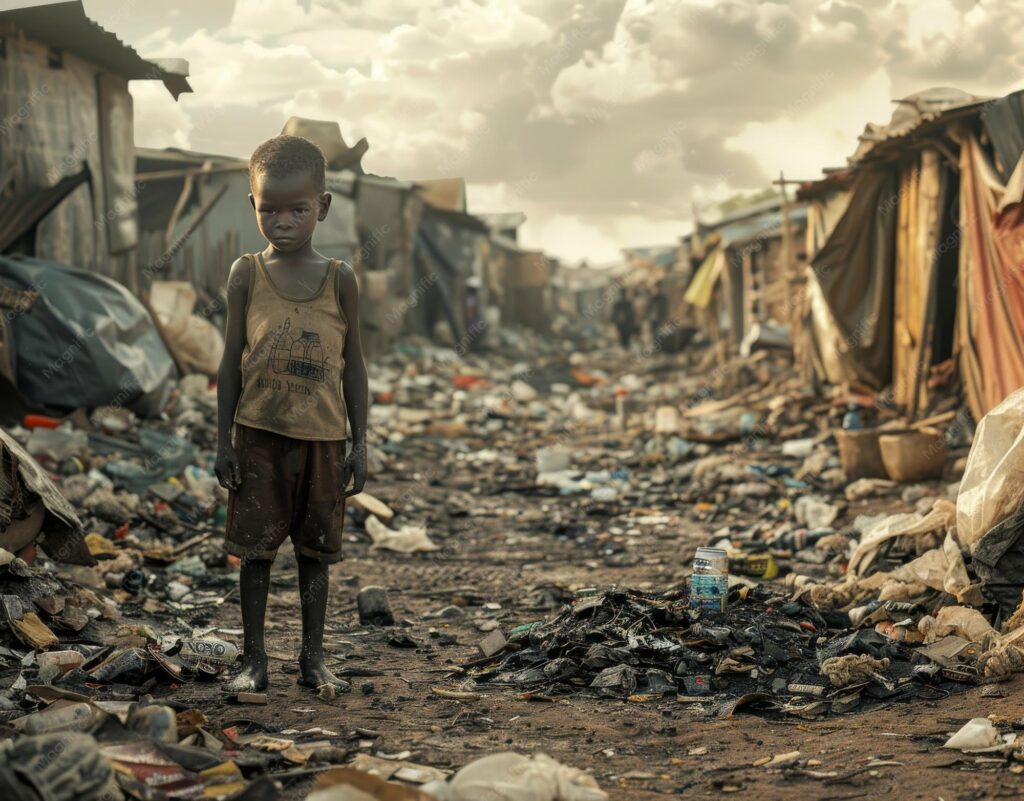
In MalariaWorld this week there is analysis of a demographic and health survey that found that poverty is the largest factor associated with malaria incidence of under-fives. ‘Identifying age-common and age-specific factors of Plasmodium infection in Nigerian children under five: Application of a cluster-aware multistage selection framework to the 2018 Nigeria Demographic and Health Survey’ by Choi et al was published in PLOS.
Children were classified as infected if either light microscopy or rapid diagnostic tests (RDT) was positive. Many factors were examined and some were found to be statistically significant to incidence of Plasmodium detection of children under five. Socioeconomic disadvantage was the strongest indicator. Children in the lowest wealth quintile had 80.7% higher prevalence than those in the richest quintile (PR=1.807; 95% CI: 1.467–2.224), and children whose mothers had no formal education had 55.8% higher prevalence than those with higher education (PR=1.558; 95% CI: 1.225–1.980). Maternal anaemia was associated with 22.5% higher prevalence (PR=1.225; 95% CI: 1.012–1.483). This may also be associated with a poorer diet. Rural residence was also associated with higher incidence.
Breastfeeding (PR=0.845; 95% CI: 0.764–0.934), and maternal internet use (PR=0.638; 95% CI: 0.475–0.857), were associated with lower prevalence of Plasmodium. The former is associated with better nutrition, and the latter may be associated with wealth (in 2018). Overweight-for-height (PR=0.761; 95% CI: 0.631–0.917) was also associated with lower prevalence of Plasmodium. It should be noted that the number of overweight children in the study was fewer than 3%.
Other factors had less effect. Curiously household insecticide-treated net (ITN) ownership was associated with more Plasmodium – 10.4% higher prevalence (PR=1.104; 95% CI: 1.017–1.198), while sleeping under an ITN was associated with 8.4% less (PR=0.916; 95% CI: 0.858–0.977). These differences are small and may be confounded with other factors.
There is a lot of information in these large population surveys and they always point to factors associated with poverty as the major factor indicating susceptibility to malaria.