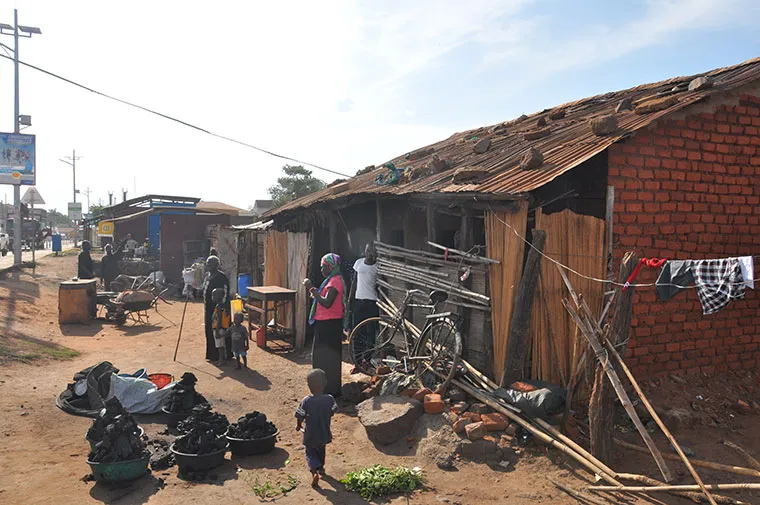
In MalariaWorld this week the most interesting article again discusses the link between malaria and poverty. ‘Prevalence, determinants, and wealth‑related inequalities in malaria among under five children in Uganda: evidence from the malaria indicator survey’ by Mwebesa et al is a secondary analysis of data from the Uganda Malaria Indicator Survey (UMIS) 2018–2019 and finds results similar to the study from Nigeria discussed last week.
Almost 23 in every 100 children under five had malaria infection measured using rapid diagnostic tests (RTD). Regional variations in malaria prevalence and wealth-related inequalities were observed. The multilevel model identified several significant independent factors: older child age (aOR=2.12, 95% CI: 1.51–2.96, P<0.001), child’s anaemia (aOR=3.16, 95% CI: 2.33–4.29, P<0.001), and larger household size (aOR=1.98, 95% CI: 1.13–3.45, P<0.05) were positively associated with malaria in children under five years in Uganda. A negative concentration index (CIX=− 0.334, P<0.001) was also observed, indicating that higher malaria prevalence is concentrated among children in the poorest wealth quintile.
The richest quintile has just 11% of the number of cases observed in the poorest quintile. Anaemic children were over three times more likely to test positive. Anaemia is a strong indicator of malnutrition. Children in households with seven or more were more than twice as likely to test positive as those in households of three or fewer. Refugees were ten times more likely to test positive than urban dwellers. Rural dwellers were over three time more likely to test positive.
There is also detail of the prevalence by region and the regions with highest prevalence with over 50% positive also feature as the poorest areas (e.g. Bugosa, West Nile, Karamoja) found by Uganda National Household Survey 2023/24 reported last year in the Observer (source of picture). Similarly, the areas with lowest poverty (e.g. Kampala, Angole, Kigezi) have among the lowest number of cases.
Mosquitos do not discriminate against the poor. But as long as researchers retain the belief about mosquito malaria transmission they will not focus on measures that would really eliminate malaria. Malaria disappeared from Europe and North America when poverty declined and similarly is disappearing from Asia.