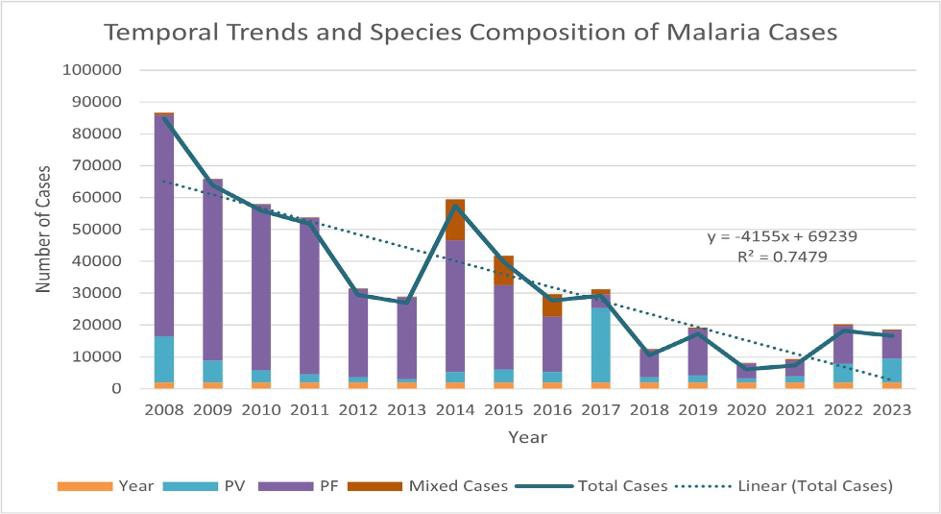
In MalariaWorld this week there is a report with data showing that malaria has declined this century in Bangladesh with seasonal variation of occurrence. ‘Long‑term associations between seasonal variability and malaria transmission in Bangladesh: a 16‑year national time‑series analysis’ by Akter et al is a retrospective ecological time-series study conducted using monthly malaria surveillance data from Bangladesh between January 2008 and December 2023.
Malaria incidence showed a marked long-term decline and a consistent seasonal pattern, with transmission peaking during the monsoon months (July–September). There were over 80,000 cases in 2008 and this has dropped to fewer than 20,000 annual cases 2018-2023. More cases are recorded in the months of June-September, peaking in July. This corresponds to the monsoon, rainy, season. The authors found a significant correlation with relative humidity and lagged rainfall.
It has been previously observed that malaria incidence is higher in rainy seasons and this is discussed in my book ‘Malaria is spread by mosquitos?’. The usual explanation based on the mosquito transmission hypothesis is that such conditions favour mosquito breeding increasing the number female Anopheles mosquitos looking for a blood meal. But it is very important to understand that correlation is not causation and this rule is particularly important when examining regular seasonal patterns. Many other factors vary with the calendar – such as harvest seasons. Also, water might be more likely to be contaminated during the rainy season.
The best news to take from this study is the decline of the incidence of malaria. This multiannual decline is unlikely to be correlated with any mosquito related factor. Malaria has declined in other Asian countries over the last 50 years. As incomes improve occurrence of malaria decreases.
However, the data in this paper show that the incidence has not continued to decline since 2018. And perhaps, unfortunately, if the current middle east crisis results in worldwide food shortages over then next few years the trend may reverse.