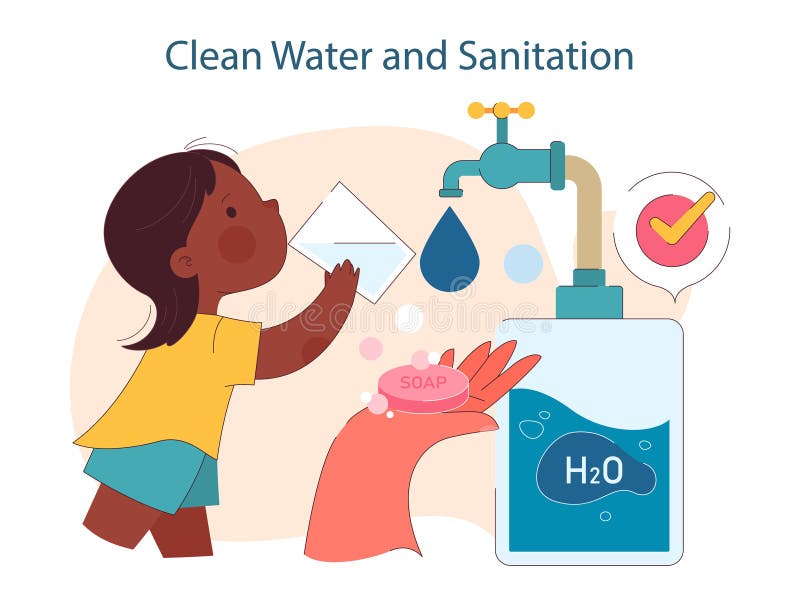
In MalariaWorld this week there is reference to the major public health challenge of Malaria in sub-Saharan Africa, and how its burden may be influenced by access to clean water, sanitation, and childhood vitamin A supplementation. ‘Investigating the relationship between malaria incidence and public health infrastructure in sub-Saharan Africa’ by Shin is in publication by Malaria Journal. Country-level data from global health databases were analysed using nonparametric statistical tests and machine learning models to assess differences in malaria incidence across categories of water and sanitation access.
Significant differences in malaria incidence were found across water and sanitation access groups, with the lowest access groups consistently exhibiting the highest incidence. Vitamin A supplementation showed statistically significant group differences, though effect sizes were generally small.
The WHO/UNICEF Joint Monitoring Programme (JMP) for Water Supply, Sanitation and Hygiene. Two variables were used to represent water supply access: (1) safely managed water supply and (2) least basic water supply. Two variables were used to represent access to sanitation services: (1) safely managed sanitation services and (2) least basic sanitation services.
Safely managed water supply refers to drinking water from an improved source that is accessible on premises, available when needed, and free from faecal and priority chemical contamination. Examples include piped water, boreholes or tubewells, protected dug wells, protected springs, and packaged or delivered water. The least basic category also includes sources with collection times of no more than 30 minutes round-trip, focusing on accessibility.
Safely managed sanitation services include improved facilities not shared with other households and where excreta are safely disposed of or treated off-site. The least basic category also includes basic services (improved facilities not shared with other households but without requiring safe disposal of excreta).
The initial dataset included a comprehensive table of malaria incidence and predictor variables for sub-Saharan African countries over the 2014 2022 period. Malaria incidence was categorised as Rare, Moderate Low, Moderate High and High. The full detailed statistical analysis is in the paper.
The author concluded that access to clean water and adequate sanitation is strongly associated with lower malaria incidence, underscoring their importance in malaria control efforts. While vitamin A supplementation shows weaker associations, it may still interact with broader health conditions.
(image from dreamstime)