In MalariaWorld this week there is a news story about an evolutionary model that examines the tradeoffs that limit harm caused by the malaria parasite. An article in phys org discusses the paper ‘Immunity can impose a reproduction–survival tradeoff on human malaria parasites’ by Patterson et al published in the journal, Evolution.
The long modelling article reaches the conclusion that pathogenic organisms themselves can be subject to a reproduction–survival tradeoff due to pressure from the immune system. This conclusion invites further examination of the germ theory/terrain theory debate from late 19th century France between Louis Pasteur (died 1895 aged 72) and Antoine Béchamp (died 1908 aged 91).
Pasteur is regarded as one of the fathers of the germ theory of diseases and conducted experiments that demonstrated that diseases could be prevented by killing or stopping germs.
Béchamp contended that bacteria could not invade a healthy animal and cause disease. He claimed instead that unfavorable host and environmental conditions destabilize the host’s native microzymas (tiny enzymes) and decompose host tissue by producing pathogenic bacteria.
The medical establishment embraced germ theory and discredits alternative approaches. However, the concept of immunity had to be developed to explain why exposure to germs is not always a cause of illness.
Which brings us back to malaria. I have seen some lists that discuss parasitic illnesses and ignore malaria. Others include it and explain that the tiny protozoa, whose presence indicates malaria, is not a bacterium or virus.
But are these protozoa the cause of illness or a reaction to illness? This in a nutshell is the essential germ theory/terrain theory debate applied to malaria. Proponents of terrain theory contend that the protozoa are present in most people. If they are healthy Protozoa are present in very low numbers and are not detectable by microscopy. But if they are in poor health due to poor nutrition or poisoning many cells die. These dead cells are then consumed by the protozoa, which multiply and become easily visible. They act as a cleanup crew to remove the dying cells. Malaria is an illness of poverty and its most seriously affects malnourished children in Africa.
If you are healthy you resist illness so exposure to microbes does not affect you. Even Pasteur on his death bed is supposed to have said “le terrain est tout, le microbe n’est rien” (The terrain is everything, the microbe is nothing).
Merry Christmas and a Happy and Prosperous New Year to all readers.
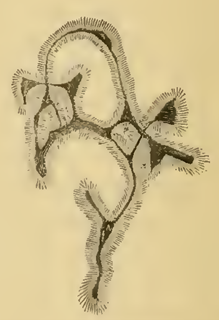
(Image of Protozoa from ‘Studi di uno zoologo sulla malaria’ by J Battista Grassi. Translation available on usmalaria website).