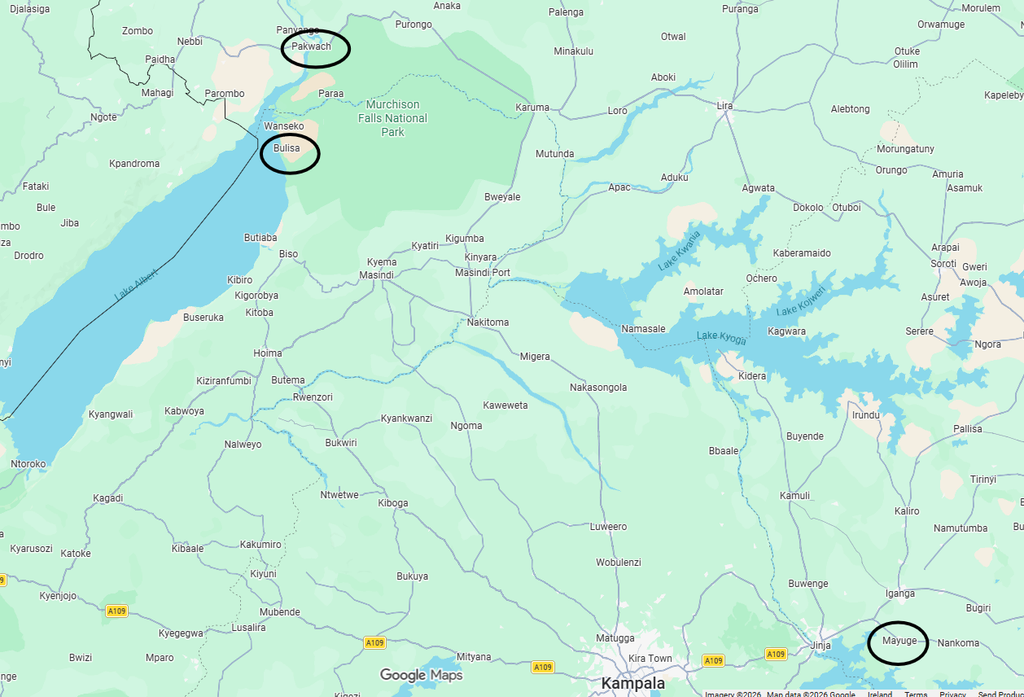
An article in MalariaWorld this week again reinforces the suspicion that malaria is a generic illness that can be found if sought. It reminds one of the testing for COVID19 that happened in much of the world in 2020-2022. ‘Non-linear age dynamics of malaria infection and fine-scale environmental exposure in rural Uganda’ by Lang et al examined data for 4308 participants aged 5 to 90 years from 52 villages across three lakeside districts of Mayuge, Buliisa, and Pakwach, with enrollment between January 2022 to February 2024. The primary outcome was malaria infection status by rapid diagnostic test (RDT) and secondary outcomes included microscopy-confirmed infection with parasite density quantification and self-reported fever within the past month.
The most notable aspect of the study was the high prevalence of malaria especially as detected using RTDs (41.2% – lower by microscopy, the ‘gold standard’ – 32.3%). However, this did not directly relate to fever with just 11.2% of positive adults with fever. For children (5 to 10) it was 30.8%. What is also interesting is that many of RDT negative adults (5.8%) and children (16.3%) had fever. Positive tests are associated with higher levels of illness but not completely. And the significant number of asymptomatic plasmodium positive individuals casts doubt on the validity of such tests for diagnosing illness.
Plasmodia are likely organisms that consume dead blood cells. They are more likely in unwell than well people but and not exactly correlated with illness. This study confirms that many well people test positive and unwell people test negative. Unwell people are more likely to be tested which is what make studies like this, that also include tests of well people so interesting.
However, the belief in malaria and its cures is strong. A friend in Kenya was ill this week and went to hospital. A malaria test was positive and malaria drugs were prescribed. They didn’t cure the illness. But her belief in the medical establishment is strong and she complies. It will be difficult to end malaria in Africa when the belief in it is so culturally entrenched.