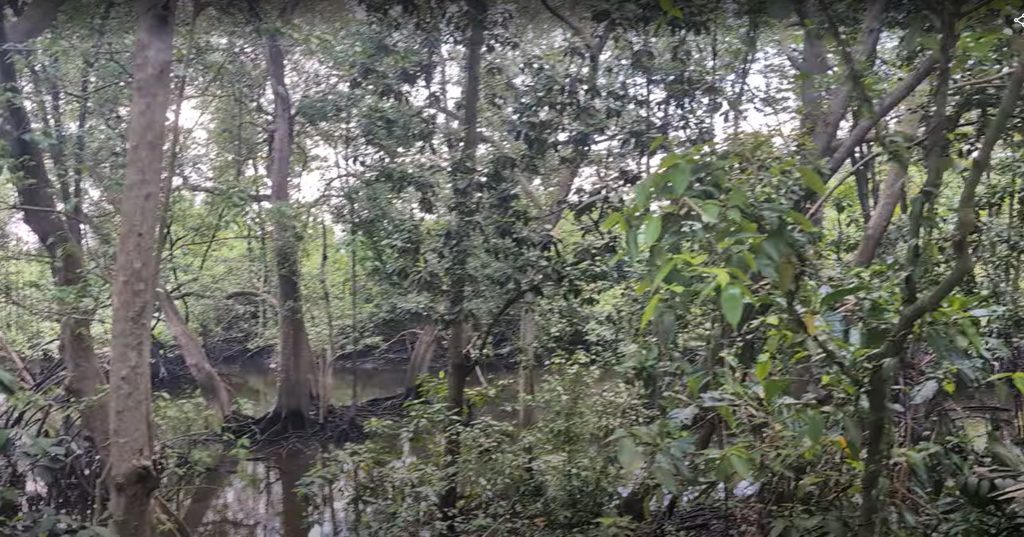
A greater incidence of malaria has always been associated with wet areas, even before the connection was made to mosquitos. Shakespeare called malaria ague and at his time it was prevalent especially in the relatively swampy East Anglia area of England. The name malaria itself is from Italian for bad air. Its cause was thought to be the bad smelling air associated with rot in swampy areas.
And today in MalariaWorld there are articles associating malaria and swamps. ‘The relationship between swamps and malaria: a review of the studies titled The Sanitary and Social Geography of Turkey’ by Taniş examines data on swamps and malaria from the anti-malaria campaigns implemented in Türkiye during the early Republican period.
The study found that the relationship between swamps and malaria varied considerably across provinces. There was a strong positive association along the Mediterranean and Aegean coasts and in the major river deltas. However, the relationship was substantially weaker in the high-altitude regions of Eastern Anatolia. Furthermore, the effectiveness of swamp-drainage programmes in controlling malaria remained limited due to factors such as fragmented implementation, recurrent flooding, and irrigation projects. The analysis also indicates that agricultural activities, particularly rice cultivation, contributed to the spread of malaria by creating artificial swamp environments.
A second MalariaWorld reference is to ‘Malaria Prevalence Near African Mangroves: Negative Association With Mangrove Extent, but Positive Association With Mangrove Greenness’ by Cruz-Laufer et al. The study claims to be the first multi-country analysis linking African mangrove forests to prevalence of malaria (Plasmodium falciparum). It examined the relationships among mangrove land cover and mangrove vegetation greenness across coastal settlements in 27 African countries, linking satellite-derived land cover, vegetation, and weather data with malaria prevalence records from 11 years, ranging from 1996 to 2020.
They found two key associations. First, increasing mangrove land cover is associated with decreasing malaria prevalence at coarse spatial resolution, refuting the traditional view of mangroves as disease-promoting environments. Second, at fine and coarse spatial resolutions, increasing mangrove health (i.e., greener vegetation) is associated with increasing malaria prevalence.
They hypothesised links between both these observations to mosquitos. The decrease associated with increased cover may be due to less larval development in shade. The increase in greener swamps may be driven by higher mosquito abundance and biodiversity in vegetation-rich mangrove areas. This speculation is contradictory. Sadly, the article is behind a pay-wall so we could not look at it in more detail (some data are available to download as zip file). It would be very useful to examine to see if there are other factors related to the location of the swamps that might point to other factors, especially related to poverty and diet.